Blog
Practical, hands-on guides on Kubernetes, DevOps, cloud infrastructure, security, and AI/LLMOps — written from real production work.
AWS account has been compromised and large EC2 instances were created
If you suspect that your AWS account has been compromised and large EC2 instances were created by an unauthorized user, it’s critical to take immediate action to contain the breach and begin investigating. Follow these steps: 1. Immediate Containment 2. Secure Your Account 3. Investigate the Breach 4. Audit IAM Access and Keys 5. Take…
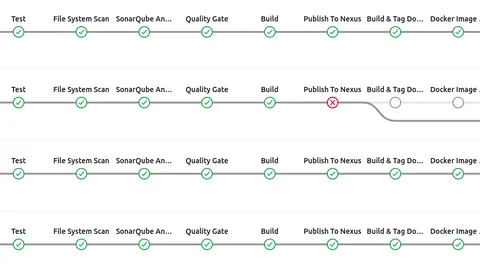
Project Introduction: End-to-End DevOps with Java-Maven Application
In this project, we will embark on a comprehensive journey to learn the entire process from development to deployment and release. We will use a Java-Maven demo application to demonstrate the various stages and tools involved in modern DevOps practices. Our focus will include Docker, Docker image versioning, Kubernetes deployment, Jenkins CI/CD, Trivy, NexusHub, GitHub,…
Kubernetes Persistent Volumes: A Comprehensive Guide
Persistent Volumes (PVs) are a critical part of Kubernetes for managing durable storage. This blog explains the concepts of PVs, their types, and how to set up NFS and AWS EBS-backed PVs. We also highlight the necessary access privileges and detailed steps for setting up and connecting various components. Steps Overview Understanding Persistent Volumes and…
StatefulSets
StatefulSets in Kubernetes provide a unique and robust solution for managing stateful applications. They offer a set of Pods with distinct identities and stable hostnames, ensuring stable network identifiers, persistent storage, and ordered deployment and scaling. Let’s dive deeper into understanding StatefulSets and how to effectively manage them. What are StatefulSets? StatefulSets are ideal for…
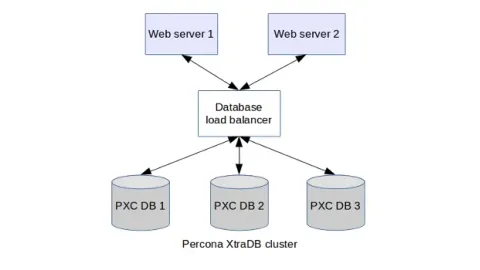
Setting Up Percona MySQL Cluster with HAProxy Load Balancer and Monitoring
How to Percona MySQL Cluster with HAProxy Load Balancer and Monitoring
Kubernetes Workloads: A Comprehensive Overview
Deployments: Ideal for stateless applications, deployments manage pods independently, treating them as disposable entities. Kubernetes automatically replaces disrupted pods to maintain the desired application state.DaemonSets: Ensuring that every node in the cluster runs a copy of a particular pod, DaemonSets are perfect for scenarios like log collection or monitoring node performance.ReplicaSets: As the name suggests, ReplicaSets maintains a specified number of pod replicas at any given time, ensuring high availability and fault tolerance.StatefulSets: Designed for applications requiring persistent identity and data storage, StatefulSets are akin to Deployments but are equipped to handle stateful workloads. They are commonly used for applications like databases where data persistence is crucial.Jobs: Utilized for running finite tasks to completion, Jobs launch one or more pods and ensure a specified number of them successfully terminate. They are suitable for tasks that don't require ongoing management of application states.CronJobs: Similar to Jobs, CronJobs executes tasks on a predefined schedule using a cron-based approach. They are handy for periodic tasks such as backups or data processing.
DaemonSets
DaemonSet is a Kubernetes resource that ensures a specific pod runs on every node in a cluster. It's like a manager that makes sure a particular task or service is always running on each worker node. So, if you have ten nodes, you'll have ten copies of that pod, one on each node.
Kubernetes Easy to Learn and Practice Labs end2end
Learn and Practice
Kubernetes Deployment
kubernetes deployment more details with yaml manifest, creation, deletion,rollout, Rollback, Rollout history, and scaling.